
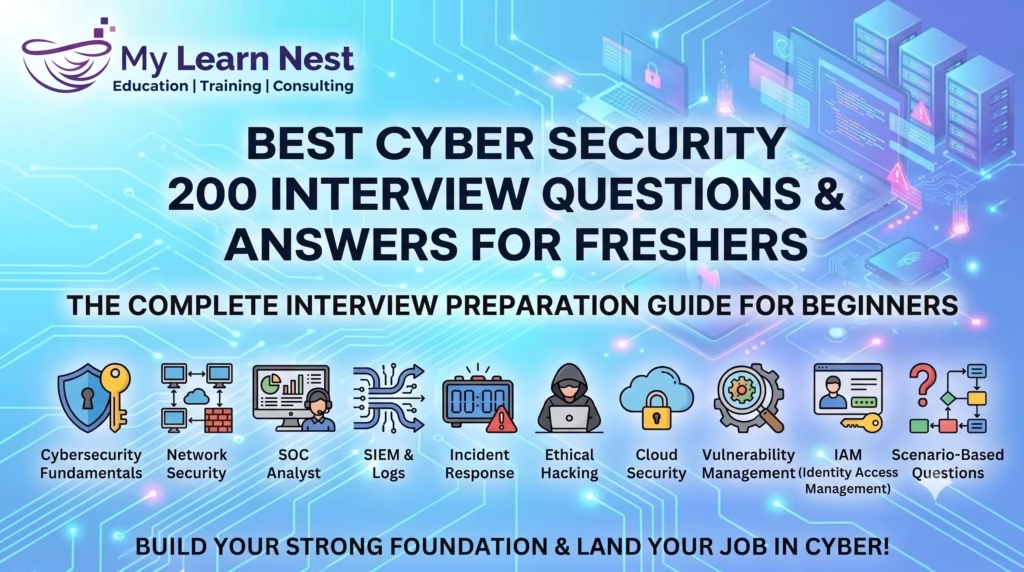
This guide provides 200 Cyber Security Interview Questions and Answers for Freshers.
MyLearnNest is a complete interview preparation guide designed to help beginners build a strong foundation in cybersecurity. This guide covers the most frequently asked Cyber Security interview questions for freshers, including network security, SOC, SIEM, incident response, ethical hacking, cloud security, vulnerability management, IAM, cybersecurity fundamentals, and scenario-based interview questions.
Whether you are preparing for your first job as a SOC Analyst, Cyber Security Analyst, Security Engineer, or IT Security Professional, this guide helps you improve your technical knowledge, interview confidence, and job readiness. Learn practical cybersecurity concepts and kick-start your career with MyLearnNest Cyber Security Training Institute, offering hands-on projects, expert-led training, and placement-focused learning.
Cyber Security Interview Questions for Freshers: Basic Concepts
1. What is Cyber Security?
Cyber Security is the practice of protecting computers, networks, applications, devices, and data from cyber threats, unauthorized access, and cyber attacks.
It includes technologies, processes, policies, and practices used to protect digital systems.
2. Why is Cybersecurity Important?
Cybersecurity is important because organizations store valuable information digitally. A cyber attack can cause financial loss, data theft, business disruption, and damage to an organization’s reputation.
Strong cybersecurity helps reduce these risks.
3. What is a Cyber Attack?
A cyber attack is an intentional attempt to gain unauthorized access to a computer system, network, application, or data.
Examples include phishing, malware attacks, ransomware, denial-of-service attacks, and unauthorized access.
4. What is a Cyber Threat?
A cyber threat is a potential danger that can exploit a weakness in a system and cause damage or unauthorized access.
Threats may come from cybercriminals, insiders, malicious software, or other sources.
5. What is Vulnerability?
A vulnerability is a weakness or security flaw in a system, application, network, or process that an attacker could exploit.
For example, outdated software may contain a vulnerability that attackers can use.
6. What is a Security Risk?
Security risk is the possibility that a threat may exploit a vulnerability and cause harm.
Risk is generally considered based on factors such as likelihood and potential impact.
7. What is an Exploit?
An exploit is a method, technique, or code that takes advantage of a vulnerability.
Attackers may use exploits to gain unauthorized access or perform other malicious activities.
8. What is the CIA Triad?
The CIA Triad is a basic cybersecurity model consisting of:
Confidentiality – Protecting information from unauthorized access.
Integrity – Ensuring information is accurate and not improperly changed.
Availability – Making sure systems and information are accessible when needed.
9. What is Confidentiality?
Confidentiality means ensuring that sensitive information is accessible only to authorized people or systems.
Encryption and access controls are commonly used to protect confidentiality.
10. What is Integrity?
Integrity means maintaining the accuracy and reliability of data.
Security controls such as hashing and digital signatures can help verify data integrity.
11. What is Availability?
Availability means ensuring that authorized users can access systems and information when they need them.
Backups, redundancy, and disaster recovery planning can help maintain availability.
12. What is Information Security?
Information security is the practice of protecting information from unauthorized access, modification, disclosure, or destruction.
Cybersecurity is a major part of information security.
13. What is Network Security?
Network security involves protecting computer networks from unauthorized access, attacks, misuse, and security threats.
Firewalls, intrusion detection systems, and access controls are examples of network security measures.
14. What is Endpoint Security?
Endpoint security protects devices such as laptops, desktops, mobile devices, and servers that connect to an organization’s network.
Antivirus software, endpoint detection systems, and security policies can help protect endpoints.
15. What is Application Security?
Application security focuses on protecting software applications from vulnerabilities and attacks.
Secure coding, vulnerability testing, access controls, and security testing are part of application security.
16. What is Data Security?
Data security involves protecting data from unauthorized access, modification, loss, or destruction.
Encryption, access control, backups, and data classification are common security measures.
17. What is Cloud Security?
Cloud security refers to the technologies and practices used to protect cloud-based systems, applications, and data.
Identity management, encryption, monitoring, and secure configurations are important parts of cloud security.
18. What is a Security Policy?
A security policy is a set of rules and guidelines that explain how an organization protects its systems and information.
It may cover passwords, access control, device usage, data protection, and incident response.
19. What is a Security Control?
A security control is a measure used to reduce security risks.
Examples include firewalls, encryption, authentication, security policies, and monitoring systems.
20. What is Defense in Depth?
Defense in depth is a security strategy that uses multiple layers of protection.
If one security control fails, another layer can provide additional protection.
Networking Interview Questions for Cyber Security Freshers (21–40)
21. What is a Computer Network?
A computer network is a group of connected devices that communicate and share resources.
Examples include local networks and wide-area networks.
22. What is an IP Address?
An IP address is a unique address used to identify a device on a network.
IPv4 and IPv6 are two commonly used IP addressing systems.
23. What is IPv4?
IPv4 is an Internet Protocol version that uses 32-bit addresses.
An example of an IPv4 address is 192.168.1.10.
24. What is IPv6?
IPv6 is a newer version of the Internet Protocol that uses 128-bit addresses.
It was developed to provide a much larger address space than IPv4.
25. What is a MAC Address?
A MAC address is a hardware identifier associated with a network interface.
It is commonly used for communication within local networks.
26. What is DNS?
DNS stands for Domain Name System.
It converts human-readable domain names into IP addresses so that devices can locate servers.
27. What is DHCP?
DHCP stands for Dynamic Host Configuration Protocol.
It automatically assigns IP addresses and other network configuration information to devices.
28. What is a Port?
A port is a logical communication endpoint used by network services.
Different services commonly use different port numbers.
29. What is TCP?
TCP stands for Transmission Control Protocol.
It provides reliable, connection-oriented communication between devices.
30. What is UDP?
UDP stands for User Datagram Protocol.
It is faster and connectionless but does not provide the same level of delivery reliability as TCP.
31. What is HTTP?
HTTP stands for Hypertext Transfer Protocol.
It is used for communication between web browsers and web servers.
32. What is HTTPS?
HTTPS is the secure version of HTTP.
It uses encryption through TLS to help protect communication between clients and servers.
33. What is a Firewall?
A firewall is a security system that controls network traffic based on defined rules.
It can allow or block traffic depending on security requirements.
34. What is a Proxy Server?
A proxy server acts as an intermediary between a user and another system or service.
It can be used for security, filtering, monitoring, or controlling internet access.
35. What is a VPN?
A VPN creates an encrypted connection between a device and a network or service.
It can help protect data while communicating over untrusted networks.
36. What is NAT?
NAT stands for Network Address Translation.
It allows private IP addresses to communicate with external networks using address translation.
37. What is a Router?
A router connects different networks and forwards data packets between them.
38. What is a Switch?
A switch connects devices within a network and forwards data to the appropriate destination.
39. What is the OSI Model?
The OSI model is a conceptual framework that describes network communication in seven layers.
These layers are Physical, Data Link, Network, Transport, Session, Presentation, and Application.
40. What is the TCP/IP Model?
The TCP/IP model is a networking framework used to describe how devices communicate over networks and the internet.
It includes layers related to network access, internet communication, transport, and applications.
Cyber Security Malware Interview Questions (41–50)
41. What is Malware?
Malware means malicious software designed to harm systems, steal information, or perform unauthorized activities.
42. What is a Virus?
A computer virus is malicious software that attaches itself to files or programs and can spread when the infected file is executed.
43. What is a Worm?
A worm is malware that can spread automatically across networks without requiring a user to manually execute an infected file.
44. What is a Trojan?
A Trojan is malicious software that appears to be legitimate but performs harmful activities after installation.
45. What is Ransomware?
Ransomware is malware that can prevent access to systems or data and demand payment from victims.
46. What is Spyware?
Spyware is software designed to secretly monitor activities or collect information from a device.
47. What is Adware?
Adware displays unwanted advertisements and may sometimes track user behavior.
48. What is a Rootkit?
A rootkit is a type of malicious software designed to hide unauthorized activities or maintain privileged access to a system.
49. What is a Botnet?
A botnet is a collection of compromised devices controlled by an attacker.
These devices may be used for malicious activities such as distributed attacks.
50. What is a Keylogger?
A keylogger is software or hardware that records keyboard input.
Attackers may use keyloggers to steal sensitive information.
Cyber Security Interview Questions on Common Attacks
51. What is Phishing?
Phishing is a social engineering attack where attackers use fake messages or websites to trick victims into revealing sensitive information.
52. What is Spear Phishing?
Spear phishing is a targeted phishing attack designed for a specific person or organization.
53. What is Whaling?
Whaling is a phishing attack that targets high-level executives or important individuals.
54. What is Smishing?
Smishing is phishing performed through SMS or text messages.
55. What is Vishing?
Vishing is phishing conducted through voice calls.
56. What is Social Engineering?
Social engineering involves manipulating people into revealing information or performing actions that may compromise security.
57. What is Brute Force Attack?
A brute force attack attempts many possible passwords or credentials until the correct combination is found.
58. What is Dictionary Attack?
A dictionary attack uses a list of commonly used words and passwords to attempt authentication.
59. What is Credential Stuffing?
Credential stuffing uses stolen usernames and passwords from one service to attempt access to other services.
60. What is Denial-of-Service Attack?
A DoS attack attempts to make a system or service unavailable by overwhelming it with requests or other malicious activity.
61. What is DDoS?
A Distributed Denial-of-Service attack comes from multiple systems or devices and attempts to overwhelm a target.
62. What is Man-in-the-Middle Attack?
A Man-in-the-Middle attack occurs when an attacker secretly intercepts communication between two parties.
63. What is Session Hijacking?
Session hijacking involves taking control of a valid user’s active session.
64. What is Spoofing?
Spoofing involves pretending to be another trusted source.
Examples include IP spoofing, email spoofing, and website spoofing.
65. What is DNS Spoofing?
DNS spoofing involves manipulating DNS responses to redirect users to an incorrect destination.
66. What is SQL Injection?
SQL injection is a web application attack where malicious input is used to interfere with database queries.
Secure coding and parameterized queries can help prevent it.
67. What is Cross-Site Scripting?
Cross-Site Scripting, or XSS, occurs when malicious scripts are injected into web pages and executed in a victim’s browser.
68. What is Cross-Site Request Forgery?
CSRF tricks an authenticated user into performing an unwanted action on a web application.
69. What is a Zero-Day Vulnerability?
A zero-day vulnerability is a security flaw that is unknown or has not yet been properly addressed by the vendor.
70. What is an Insider Threat?
An insider threat comes from someone inside an organization who misuses authorized access or intentionally or accidentally causes security problems.
Cyber Security Interview Questions on Authentication
71. What is Authentication?
Authentication is the process of verifying a user’s identity.
72. What is Authorization?
Authorization determines what an authenticated user is allowed to access or perform.
73. What is the Difference Between Authentication and Authorization?
Authentication answers “Who are you?”
Authorization answers “What are you allowed to do?”
74. What is Multi-Factor Authentication?
MFA requires users to provide two or more authentication factors to access an account.
75. What Are Authentication Factors?
Common factors include something you know, something you have, and something you are.
76. What is Single Sign-On?
SSO allows users to access multiple applications using one authentication process.
77. What is Least Privilege?
Least privilege means giving users only the minimum access required to perform their job.
78. What is Role-Based Access Control?
RBAC assigns permissions based on a user’s job role.
79. What is Password Hashing?
Password hashing converts passwords into fixed-length values using a one-way function.
Secure password storage should use appropriate password hashing methods.
80. What is Salting?
A salt is additional random data added to a password before hashing.
It helps make password attacks more difficult.
Cyber Security Interview Questions on Encryption
81. What is Encryption?
Encryption converts readable information into an unreadable format to protect it from unauthorized access.
82. What is Decryption?
Decryption converts encrypted information back into readable form using the appropriate key.
83. What is Symmetric Encryption?
Symmetric encryption uses the same key for encryption and decryption.
84. What is Asymmetric Encryption?
Asymmetric encryption uses a pair of keys: a public key and a private key.
85. What is a Public Key?
A public key can be shared with others and is used in public-key cryptography.
86. What is a Private Key?
A private key must be kept secret and is used by its owner for cryptographic operations.
87. What is Hashing?
Hashing converts data into a fixed-length value.
It is commonly used for integrity checking and secure password storage.
88. What is a Digital Signature?
A digital signature helps verify the authenticity and integrity of digital information.
89. What is TLS?
TLS stands for Transport Layer Security.
It helps protect data transmitted over networks by providing encryption and authentication.
90. What is SSL?
SSL is an older security protocol that was used to secure network communication. Modern systems generally use TLS instead.
Cyber Security Interview Questions on Ethical Hacking
91. What is Ethical Hacking?
Ethical hacking is authorized security testing performed to identify weaknesses and improve security.
92. What is a Penetration Test?
A penetration test is an authorized security assessment designed to identify and validate security weaknesses.
93. What is a Security Assessment?
A security assessment evaluates systems, processes, and controls to identify potential security risks.
94. What is Vulnerability Assessment?
Vulnerability assessment identifies and evaluates potential weaknesses in systems or applications.
95. What is the Difference Between Vulnerability Assessment and Penetration Testing?
Vulnerability assessment focuses on identifying potential vulnerabilities.
Penetration testing goes further by attempting to validate whether identified weaknesses can actually be exploited in an authorized environment.
96. What is Reconnaissance?
Reconnaissance is the information-gathering stage of a security assessment.
97. What is Scanning?
Scanning involves examining systems or networks to identify available services, configurations, or potential weaknesses.
98. What is Enumeration?
Enumeration involves gathering more detailed information about systems, services, or resources.
99. What is a Security Audit?
A security audit reviews security controls, policies, and processes to determine whether they meet defined requirements.
100. What is Responsible Disclosure?
Responsible disclosure is the process of reporting security vulnerabilities to the appropriate organization so they can be addressed.
Cyber Security Interview Questions on SOC
101. What is a SOC?
SOC stands for Security Operations Center.
It is a team or function responsible for monitoring, detecting, investigating, and responding to security threats.
102. What Does a SOC Analyst Do?
A SOC analyst monitors security alerts, investigates suspicious activities, analyzes logs, and supports incident response.
103. What is a Security Alert?
A security alert is a notification generated when a system detects activity that may indicate a security problem.
104. What is an Incident?
A security incident is an event that may compromise the confidentiality, integrity, or availability of information or systems.
105. What is Incident Response?
Incident response is the process of identifying, analyzing, containing, and recovering from security incidents.
106. What is SIEM?
SIEM stands for Security Information and Event Management.
It collects and analyzes security logs and events from different sources.
107. What is Log Management?
Log management involves collecting, storing, analyzing, and monitoring system and security logs.
108. What is a False Positive?
A false positive occurs when a security system identifies normal activity as suspicious or malicious.
109. What is a False Negative?
A false negative occurs when a real security threat is not detected.
110. What is Threat Detection?
Threat detection is the process of identifying potentially malicious activity.
111. What is Threat Hunting?
Threat hunting involves proactively searching for hidden threats that may not have triggered traditional security alerts.
112. What is an Indicator of Compromise?
An Indicator of Compromise, or IoC, is evidence that may suggest a system has been compromised.
Examples include suspicious file hashes, domains, IP addresses, or unusual system activity.
113. What is an Indicator of Attack?
An Indicator of Attack is a sign that an attack may be occurring or being attempted.
114. What is a Security Incident Ticket?
An incident ticket records information about a security event, including details, investigation steps, and resolution.
115. What is Incident Prioritization?
Incident prioritization determines which security incidents require immediate attention based on factors such as severity and potential impact.
Cyber Security Interview Questions on Incident Response
116. What Are the Main Phases of Incident Response?
Common phases include preparation, detection and analysis, containment, eradication, recovery, and lessons learned.
117. What is Incident Containment?
Containment limits the spread or impact of a security incident.
118. What is Eradication?
Eradication involves removing the cause or components of a security incident from affected systems.
119. What is Recovery?
Recovery involves restoring affected systems and returning operations to normal.
120. What is a Post-Incident Review?
A post-incident review analyzes what happened, how the organization responded, and what improvements should be made.
Cyber Security Interview Questions on Linux
121. What is Linux?
Linux is an open-source operating system widely used in servers, cloud environments, cybersecurity, and other technology areas.
122. Why is Linux Important in Cybersecurity?
Linux is commonly used in servers and security tools. Understanding Linux commands and system administration can be valuable for cybersecurity professionals.
123. What is the Root User?
The root user has highly privileged access to a Linux system.
124. What is File Permission?
Linux file permissions control who can read, write, or execute a file.
125. What is SSH?
SSH stands for Secure Shell.
It provides secure remote access to systems.
126. What is a Process?
A process is a running instance of a program.
127. What is a Linux Log File?
A log file records system or application activities and can help with troubleshooting and security investigation.
128. What is sudo?
sudo allows authorized users to execute commands with elevated privileges.
129. What is the Linux Command Line?
The command line is an interface where users interact with the operating system by entering commands.
130. Why Do Security Professionals Learn Linux?
Linux knowledge helps cybersecurity professionals understand servers, security tools, logs, permissions, processes, and system operations.
Cyber Security Interview Questions on Cloud Security
131. What is Cloud Computing?
Cloud computing provides computing resources such as storage, servers, and applications over the internet.
132. What is Cloud Security?
Cloud security involves protecting cloud infrastructure, applications, identities, and data.
133. What is the Shared Responsibility Model?
The shared responsibility model divides security responsibilities between the cloud provider and the customer.
The exact responsibilities depend on the cloud service being used.
134. What is IAM?
IAM stands for Identity and Access Management.
It controls who can access resources and what actions they can perform.
135. What is Cloud Misconfiguration?
A cloud misconfiguration occurs when cloud resources are configured incorrectly and create security risks.
136. What is Cloud Data Encryption?
Cloud data encryption protects data by converting it into an unreadable format.
137. Why is Cloud Security Important?
Organizations store important data and applications in cloud environments. Strong security controls help reduce the risk of unauthorized access and data exposure.
138. What is a Security Group?
A security group is a virtual security control used in some cloud environments to control network traffic to resources.
139. What is Cloud Logging?
Cloud logging records activities and events occurring within cloud environments.
140. What is Cloud Access Control?
Cloud access control determines which users and services can access specific cloud resources.
Cyber Security Interview Questions on Risk and Compliance
141. What is Risk Management?
Risk management involves identifying, evaluating, and reducing security risks.
142. What is Risk Assessment?
Risk assessment identifies potential risks and evaluates their likelihood and impact.
143. What is Compliance?
Compliance means following applicable laws, regulations, standards, and organizational requirements.
144. What is GRC?
GRC stands for Governance, Risk, and Compliance.
145. What is Governance?
Governance refers to the policies, processes, and structures used to manage security.
146. What is a Security Standard?
A security standard provides recommended or required practices for managing security.
147. What is an Information Security Policy?
It is a formal document that defines how an organization protects information and manages security responsibilities.
148. What is Data Privacy?
Data privacy focuses on how personal and sensitive information is collected, used, stored, and shared.
149. What is Data Classification?
Data classification organizes information into categories based on its sensitivity and importance.
150. What is a Security Framework?
A security framework provides structured guidance for managing cybersecurity risks and controls.
Cyber Security Interview Questions on Digital Forensics
151. What is Digital Forensics?
Digital forensics is the process of collecting and analyzing digital evidence for investigations.
152. What is Digital Evidence?
Digital evidence is information stored or transmitted in digital form that may be relevant to an investigation.
153. What is Chain of Custody?
Chain of custody documents how evidence was collected, handled, transferred, and stored.
154. Why is Evidence Preservation Important?
Evidence preservation helps maintain the integrity and reliability of evidence.
155. What is File Metadata?
File metadata contains information about a file, such as timestamps, size, and other properties.
156. What is a Forensic Image?
A forensic image is a bit-by-bit copy of digital storage created for investigation purposes.
157. What is Memory Forensics?
Memory forensics involves analyzing data stored in a system’s volatile memory.
158. What is Timeline Analysis?
Timeline analysis examines events in chronological order to understand what happened during an incident.
159. What is Evidence Integrity?
Evidence integrity means ensuring that evidence remains unchanged and reliable during an investigation.
160. What Skills Are Useful for Digital Forensics?
Useful skills include operating systems, file systems, networking, evidence handling, analytical thinking, and attention to detail.
Cyber Security Interview Questions on Security Tools
161. What is Wireshark?
Wireshark is a network protocol analyzer used to capture and analyze network traffic.
162. What is Nmap?
Nmap is a network discovery and security auditing tool commonly used in authorized environments.
163. What is Burp Suite?
Burp Suite is a web security testing platform used to assess web applications in authorized environments.
164. What is Metasploit?
Metasploit is a security testing framework used by professionals to validate vulnerabilities in authorized environments.
165. What is a Vulnerability Scanner?
A vulnerability scanner helps identify potential security weaknesses in systems and applications.
166. What is Antivirus Software?
Antivirus software detects and helps remove malicious software.
167. What is EDR?
EDR stands for Endpoint Detection and Response.
It monitors endpoint activity and helps security teams detect and investigate threats.
168. What is IDS?
IDS stands for Intrusion Detection System.
It monitors activity and generates alerts when suspicious behavior is detected.
169. What is IPS?
IPS stands for Intrusion Prevention System.
It can detect and help block malicious network activity.
170. What is a Firewall Rule?
A firewall rule defines whether specific network traffic should be allowed or blocked.
Cyber Security Scenario-Based Interview Questions
171. What Would You Do If You Receive a Suspicious Email?
I would not click links or open attachments. I would verify the sender, inspect the message carefully, report it according to company policy, and follow the organization’s security procedures.
172. What Would You Do If You Detect a Suspicious Login?
I would review the login details, check the source, time, location, and related activity. I would investigate whether the login is legitimate and escalate the incident if necessary.
173. What Would You Do If a User Clicks a Phishing Link?
I would follow the organization’s incident response process. I would report the event, determine whether credentials were entered, assess the affected system, and take appropriate containment and recovery actions.
174. What Would You Do If Malware Is Detected?
I would follow the incident response procedure, isolate the affected system if required, collect relevant information, investigate the event, and escalate to the appropriate security team.
175. How Would You Handle a Security Alert?
I would first understand the alert, validate whether it is a true or false positive, collect relevant evidence, investigate related activity, determine severity, and document the findings.
176. How Would You Prioritize Security Incidents?
I would consider factors such as severity, affected systems, business impact, number of users affected, sensitivity of data, and likelihood of further damage.
177. What Would You Do If a System Is Compromised?
I would follow the organization’s incident response process. Depending on the situation, the system may need to be isolated, investigated, and restored after the threat is removed.
178. What Would You Do If You Find a Vulnerability?
I would document the vulnerability clearly, assess its potential impact, report it through the appropriate process, and recommend remediation.
179. What Would You Do If You Made a Security Mistake?
I would report it immediately rather than hiding it. Early reporting allows the security team to assess the situation and reduce potential damage.
180. How Would You Explain a Security Issue to a Non-Technical Person?
I would avoid complicated technical terms and explain the issue using simple language, focusing on the business impact and recommended solution.
Cyber Security HR Interview Questions for Freshers
181. Why Do You Want to Work in Cybersecurity?
I am interested in cybersecurity because I enjoy technology and problem-solving. Cybersecurity is a field where I can continuously learn new concepts while helping organizations protect their systems and information.
182. Why Should We Hire You as a Cybersecurity Fresher?
As a fresher, I may not have extensive professional experience, but I am willing to learn and improve. I have developed knowledge of cybersecurity fundamentals and I am interested in gaining practical experience and contributing to the organization.
183. What Are Your Strengths?
My strengths include willingness to learn, attention to detail, problem-solving, patience, and the ability to understand technical concepts step by step.
184. What Is Your Weakness?
One area I am working on is improving my practical experience. I am addressing this by working on projects, practicing in controlled labs, and continuously learning new cybersecurity concepts.
185. Where Do You See Yourself in Five Years?
I want to become a skilled cybersecurity professional with strong practical knowledge and experience. I would like to specialize in an area such as security operations, cloud security, or ethical hacking based on my career growth.
186. Are You Comfortable Working in Shifts?
Yes. I understand that cybersecurity teams, especially SOC teams, may operate around the clock. I am open to working in shifts based on organizational requirements.
187. How Do You Keep Your Cybersecurity Knowledge Updated?
I follow cybersecurity news, security blogs, professional communities, training resources, and industry updates. I also practice technical concepts through authorized labs and projects.
188. What Is Your Favorite Cybersecurity Topic?
I am particularly interested in security operations and threat detection because I enjoy analyzing security events and understanding how security teams identify and respond to threats.
189. Do You Have Any Cybersecurity Projects?
Yes. I have worked on practical cybersecurity projects as part of my learning. These projects helped me understand security concepts and apply them in controlled environments.
190. What Are Your Career Goals?
My goal is to build a strong foundation in cybersecurity, gain practical experience, and gradually specialize in an area where I can contribute effectively.
Advanced Beginner Cyber Security Interview Questions
191. What is Zero Trust?
Zero Trust is a security approach based on the principle that access should not be automatically trusted. Users and devices should be verified and given only the access they need.
192. What is the Principle of Least Privilege?
It means giving users and systems only the minimum permissions necessary to perform their required tasks.
193. What is Security by Design?
Security by design means considering security requirements from the beginning of developing or designing a system rather than adding security at the end.
194. What is Patch Management?
Patch management is the process of identifying, testing, and applying software updates to address bugs and security vulnerabilities.
195. Why Are Software Updates Important?
Software updates can fix security vulnerabilities, improve performance, and address known issues.
196. What is a Backup?
A backup is a copy of important data stored separately so it can be restored if the original data is lost or damaged.
197. What is Disaster Recovery?
Disaster recovery is the process of restoring IT systems and operations after a major disruption.
198. What is Business Continuity?
Business continuity focuses on keeping important business operations running during and after disruptions.
199. What is Cybersecurity Awareness?
Cybersecurity awareness means educating users about security risks and safe practices.
200. What Advice Would You Give to a Cybersecurity Fresher?
My advice is to build strong fundamentals first. Learn networking, operating systems, Linux, and basic security concepts. Then choose a specialization, work on practical projects, practice in authorized labs, and continuously improve your skills.
Cyber Security Interview Preparation Roadmap
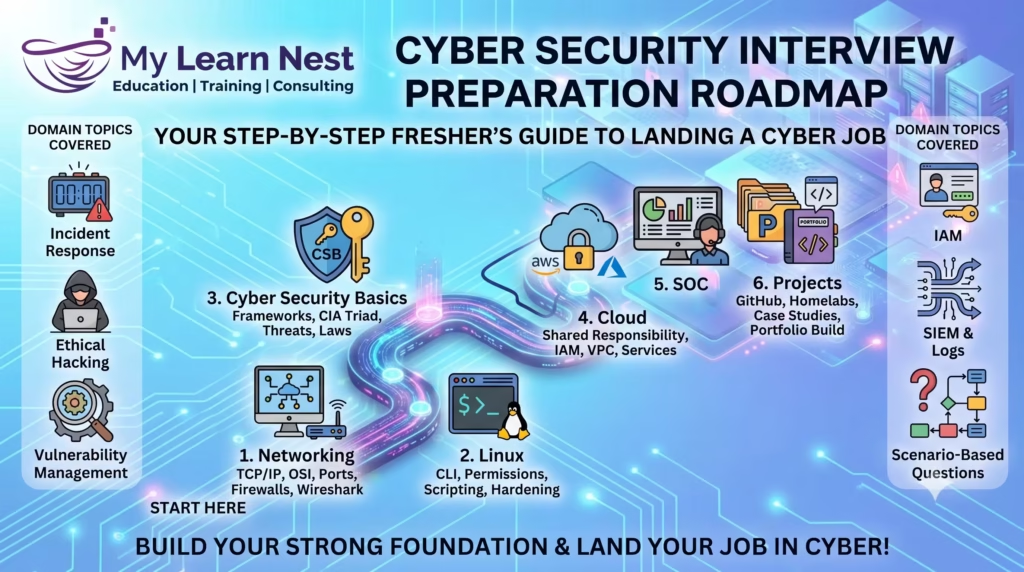
How to Prepare for a Cyber Security Interview as a Fresher
Preparing for a cybersecurity interview requires more than memorizing questions and answers.
Start with the basics.
- Make sure you understand networking concepts such as IP addresses, DNS, TCP, UDP, ports, HTTP, HTTPS, and firewalls.
- Learn basic Linux commands and understand how operating systems work.
- Study common cyber attacks such as phishing, malware, ransomware, SQL injection, and denial-of-service attacks.
- Understand the CIA Triad and other basic security principles.
- Learn the difference between vulnerabilities, threats, risks, and exploits.
- Understand authentication and authorization.
- Learn about SIEM, SOC, IDS, IPS, EDR, and firewalls.
- Practice explaining security concepts in simple words.
- Work on at least two or three cybersecurity projects.
- Prepare to discuss your projects in detail.
If you have completed cybersecurity training or certifications, understand the topics covered instead of simply memorizing exam questions.
Interview Tips
✔ Speak clearly
✔ Don’t memorize answers
✔ Explain with examples
✔ Mention projects
✔ Be honest if you don’t know
How to Answer Cyber Security Interview Questions
When answering interview questions, try to be clear and direct.
- Start with a simple definition.
- Then explain the concept briefly.
- If possible, provide a small example.
- For technical questions, avoid using complicated terminology unless necessary.
- For scenario-based questions, explain your approach step by step.
For example, if the interviewer asks what you would do after detecting a suspicious login, you can explain that you would validate the alert, review relevant logs, investigate the activity, determine the impact, and follow the incident response process.
Interviewers generally want to understand how you think.You do not need to know every answer.If you do not know something, it is better to be honest and explain how you would learn or investigate the topic.
Common Mistakes Freshers Make in Cyber Security Interviews
- One common mistake is memorizing answers without understanding the concepts.
- Interviewers may ask follow-up questions, and memorized answers may not be enough.
- Another mistake is putting too many tools on a resume without practical knowledge.
- If you mention a tool, be prepared to explain what it does and how you have used it.
- Freshers should also avoid exaggerating their project experience.
- Be honest about your role and level of knowledge.
- Another mistake is ignoring communication skills.
- Cybersecurity professionals need to explain technical risks clearly.
- Finally, do not focus only on offensive security.
Cybersecurity includes many areas such as security operations, cloud security, governance, risk, compliance, incident response, digital forensics, and application security.
Why Cyber Security Training Is Important for Freshers
A structured cybersecurity training program can help freshers build their knowledge step by step.Instead of learning random topics, students can follow a structured curriculum that starts with fundamentals and gradually moves toward advanced concepts.
Practical training can also help learners understand cybersecurity tools and workflows.For example, a student may learn how security monitoring works by working on a simulated SOC project.Another learner may understand vulnerability assessment through controlled lab exercises.Hands-on learning can make cybersecurity concepts easier to remember.
How MyLearnNest Can Help Freshers Build a Cybersecurity Career
Starting a cybersecurity career can feel confusing because the field has many different specializations.
At MyLearnNest, learners can focus on building a strong foundation and developing practical cybersecurity knowledge.A structured learning path can help students understand networking, Linux, cybersecurity fundamentals, ethical hacking, security operations, cloud security, and other important areas.Practical projects can also help freshers connect theoretical knowledge with real-world scenarios.
For a beginner, the goal should not be to learn every cybersecurity topic at once.Instead, start with the basics, understand the concepts, practice regularly, and gradually choose a specialization.
MyLearnNest can be considered by students and freshers looking for structured cyber security training, practical learning, and career-oriented preparation.
Final Thoughts on Cyber Security Interview Questions for Freshers
Preparing for a cybersecurity interview is a journey.You do not need to know everything before attending your first interview.What you need is a strong understanding of the fundamentals, practical exposure, curiosity, and a willingness to learn.
The 200 Cyber Security Interview Questions and Answers for Freshers covered in this guide can help you revise important topics before an interview.Start by learning the basics of cybersecurity and networking.Understand common attacks and security controls.Learn about authentication, encryption, firewalls, malware, and incident response.
- Explore SOC operations and SIEM concepts.
- Practice Linux fundamentals.
- Understand cloud security basics.
- Work on real-time cybersecurity projects.
- Prepare for scenario-based questions.
Most importantly, understand the concepts instead of memorizing answers.
The cybersecurity industry is constantly changing, so continuous learning is essential. New technologies and threats will continue to emerge, and cybersecurity professionals must be ready to adapt.If you are a fresher planning to build a career in cybersecurity, start today. Build your foundation, practice your skills, complete relevant projects, and prepare for interviews with confidence.
With the right combination of cyber security training, hands-on projects, certifications, and consistent learning, you can take your first step toward a successful cybersecurity career.
MyLearnNest can support learners who want to develop cybersecurity knowledge and practical skills as they prepare for their professional journey.
Frequently Asked Questions About Cyber Security Interviews for Freshers
Is cybersecurity a good career for freshers?
Yes. Cybersecurity offers different career paths, including SOC analyst, security analyst, ethical hacker, cloud security, incident response, and governance roles.
What should I learn first for a cybersecurity interview?
Start with networking, operating systems, Linux, cybersecurity fundamentals, common cyber attacks, authentication, encryption, and basic security tools.
Do freshers need cybersecurity certifications?
Certifications are not always mandatory, but a relevant certification can demonstrate your knowledge and commitment to cybersecurity.
Can I get a cybersecurity job without experience?
Yes, freshers can apply for entry-level cybersecurity roles. Practical projects, internships, training, certifications, and strong fundamentals can help improve your profile.
What is the most important topic for a cybersecurity interview?
There is no single most important topic. Candidates should understand networking, security fundamentals, common attacks, authentication, incident response, and basic cybersecurity tools.
How many cybersecurity interview questions should I prepare?
Instead of focusing only on the number of questions, focus on understanding the important concepts. Preparing a broad set of questions can help you revise different cybersecurity topics.
Are cybersecurity interviews difficult?
The difficulty depends on the role and company. Entry-level interviews generally focus on fundamentals, while advanced roles may require deeper technical knowledge and professional experience.
What is the best cybersecurity job for a fresher?
SOC analyst, junior security analyst, and entry-level cybersecurity roles can be good starting points. The right role depends on your skills and interests.
How can I prepare for a SOC analyst interview?
Learn networking, Windows and Linux basics, log analysis, SIEM concepts, incident response, common cyber attacks, and security monitoring.
How can I prepare for an ethical hacking interview?
Learn networking, Linux, web application security, vulnerability assessment, penetration testing concepts, and cybersecurity fundamentals. Always practice ethical hacking only in authorized environments.
How important are cybersecurity projects for freshers?
Projects can be very useful because they demonstrate practical learning. They also give you real examples to discuss during interviews.
What should I say if I don’t know an interview answer?
Be honest. You can say that you are not familiar with the topic yet but are interested in learning it. Showing honesty and a willingness to learn is better than providing incorrect information.
How can I improve my cybersecurity interview skills?
Study fundamentals, practice answering questions aloud, work on practical projects, participate in authorized labs, and conduct mock interviews.
Can MyLearnNest help me prepare for a cybersecurity career?
MyLearnNest can be considered by students and freshers looking for structured cybersecurity learning, practical exposure, and career-oriented skill development. Combining training with projects and interview preparation can help learners become more confident.

